





Proposal Generator
Persuasive client proposals fast
 NVIDIA: Nemotron 3 Ultra (free)





Your prompt will appear here…
Your beautifully formatted article will appear here once you generate.
No history yet
Your generations will appear here. Sign in to save them permanently.
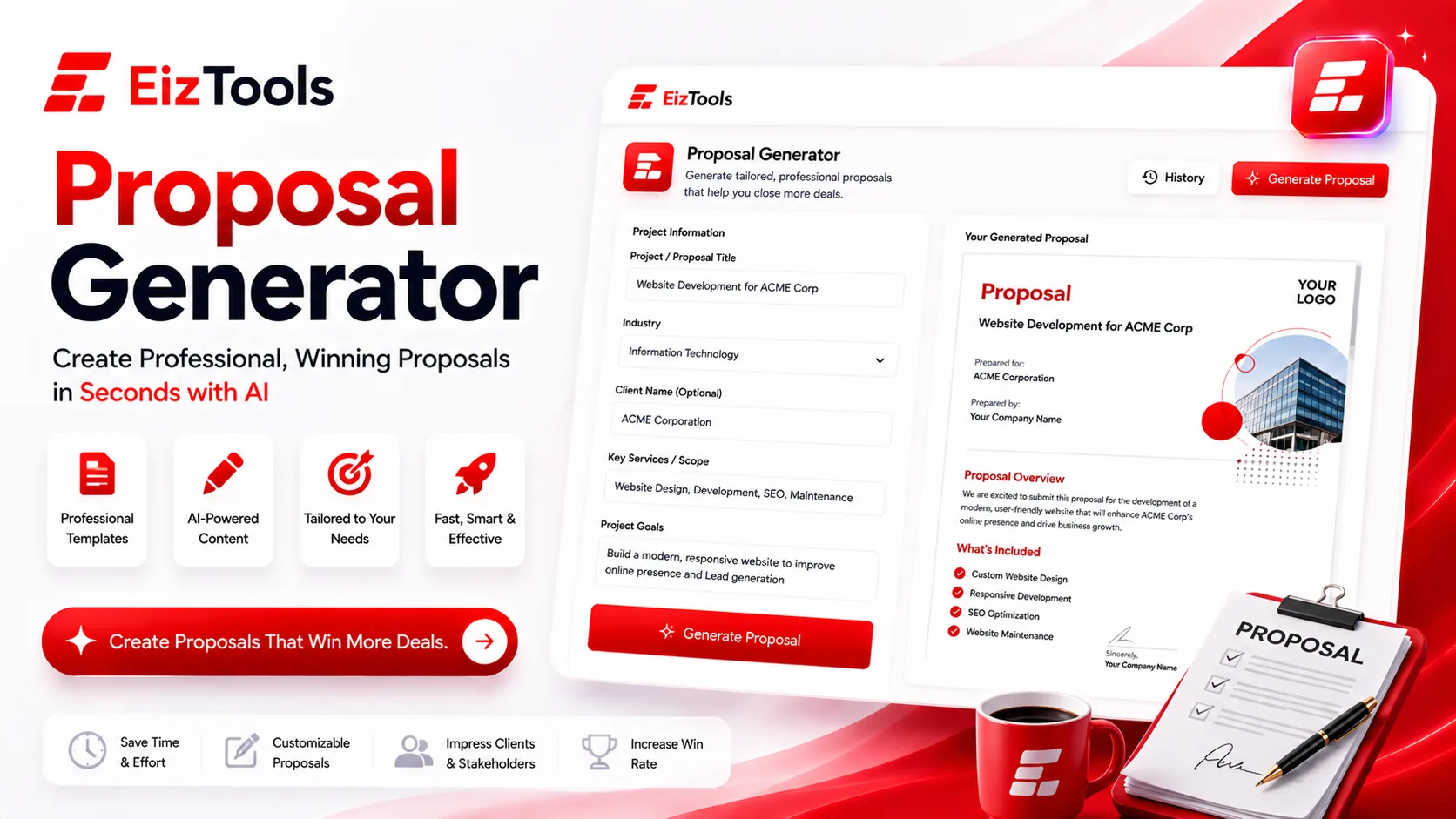
A proposal is usually the last thing a prospect reads before deciding whether to hire you. Get it right and a hesitant lead becomes a signed contract. Get it wrong — a rambling overview, fuzzy scope, the price buried on the final page — and the reply simply never comes. Most proposals fail not because the work behind them is weak, but because the document was built in a rush, from a blank page, the night before it was due. This walkthrough shows how to assemble one that closes, using the Proposal Generator to turn a rough brief into a structured, persuasive document you can send with your name behind it.
Capture the brief first
Strong proposals start before you write a single sentence — they start with what you already know about the client. Skip this step and you end up padding the document with generic promises that could apply to anyone, which is the quickest way to sound like every other bid sitting in the inbox.
What to pull together
Gather the raw material before you open the tool:
- The client's name, industry, and how they describe their own business
- The problem in their words, not your tidy paraphrase of it
- The specific result they are actually chasing
- Any signal about budget or the range they can spend
- The deadline that is genuinely driving the decision
- Who signs off, because that is the person you are really writing for
Feed that into the Proposal Generator as your brief. It shapes rough notes into an overview, approach, deliverables, timeline, and pricing — but the sharper your input, the sharper the draft it returns. Working solo and want a lighter place to begin? The Freelance Proposal Draft spins up a quick scaffold you can riff on before committing to the full document.
Lead with their outcome
Here is the mistake that sinks more proposals than any other: opening with your own company history. The prospect does not care that you were founded in 2015 or that your team is passionate about excellence. They care about the result waiting on the other side of this project.
So make the overview about them. Name the outcome they want in the first two lines — more qualified leads, a site that loads in under two seconds, a payroll run that stops eating every Friday. Mirror the exact language they used in the brief. When clients read their own problem described back to them clearly, they assume you understand it, and that understanding is what they are really paying for. People rarely buy deliverables for their own sake; they buy the change those deliverables produce, and the proposal that names that change first tends to beat one that opens with a feature list.
Approach and deliverables
Once the outcome is on the table, show the path to it. The approach section is where you build quiet confidence: a short, plain-language account of how you will move from their problem to their result. Three or four phases is plenty. You are not writing a technical manual here — you are proving you have a method rather than a hopeful guess.
Then get specific about deliverables. Vagueness at this stage breeds scope creep, awkward mid-project conversations, and margins that quietly shrink. Spell out exactly what the client receives and, just as usefully, what falls outside the agreement. A clear boundary protects both sides.
| Section | What it really does |
|---|---|
| Overview | Proves you understand the client's problem |
| Approach | Shows a method instead of guesswork |
| Deliverables | Sets exact, bounded expectations |
| Timeline | Makes the project feel real and scheduled |
| Pricing | Frames the cost against the value delivered |
Read the two columns together and the logic of a persuasive proposal becomes obvious: every section is doing a real job for the client, not merely filling space on the page.
Timeline and pricing
Prospects want to know two things next — when, and how much. Break the timeline into phases with rough dates or durations: weeks one and two for discovery and wireframes, then the build, then review and handover. A scheduled project feels real, and it quietly signals that you have run this play before.
On price, be direct. Present it as a small set of clear options rather than a single intimidating figure, and anchor each one against the outcome you named up top. If a redesign is meant to lift conversions, a few thousand dollars reads very differently beside the revenue it unlocks. Once the proposal is accepted and the deposit falls due, an Invoice Generator turns that same pricing into a payable invoice in seconds, so nothing stalls between the yes and getting paid.
Pricing that reads well
- Offer two or three tiers instead of a long wall of line items
- Place the option you actually recommend in the middle
- Say what each price includes in a single plain line
- Show the full total, not a monthly figure that hides it
Close with a clear step
A proposal that ends with "let me know your thoughts" hands the decision back to a busy person and quietly hopes they act. They usually don't. Close instead with one obvious next step: sign here, book the kickoff call, or reply with a start date. A single ask, stated plainly, removes the friction that lets warm deals drift and cool.
Keep the action small and the timing current. A soft note that you have capacity this month is honest urgency, not pressure — then send it while the conversation is still fresh, not a week later when the moment has passed.
Polish before sending
Give the draft one honest read as though you were the client receiving it. Does the opening paragraph speak to their problem or to yours? Is every deliverable something you can genuinely point at and hand over? Is the price easy to find and easy to say yes to? The Proposal Generator hands you a polished structure fast, but this final pass — where you swap a generic line for the client's own words — is what turns a solid template into a document that feels written for one person. That small difference is often what separates a maybe from a signed page.

Sabir Bepari
Founder of EizTools and a passionate AI enthusiast dedicated to building practical, user-friendly AI tools that simplify everyday tasks.