
Learn AI Tools Step by Step for Beginners
Build practical AI skills from scratch through easy lessons, hands on examples, and beginner friendly guidance for everyday success consistently.
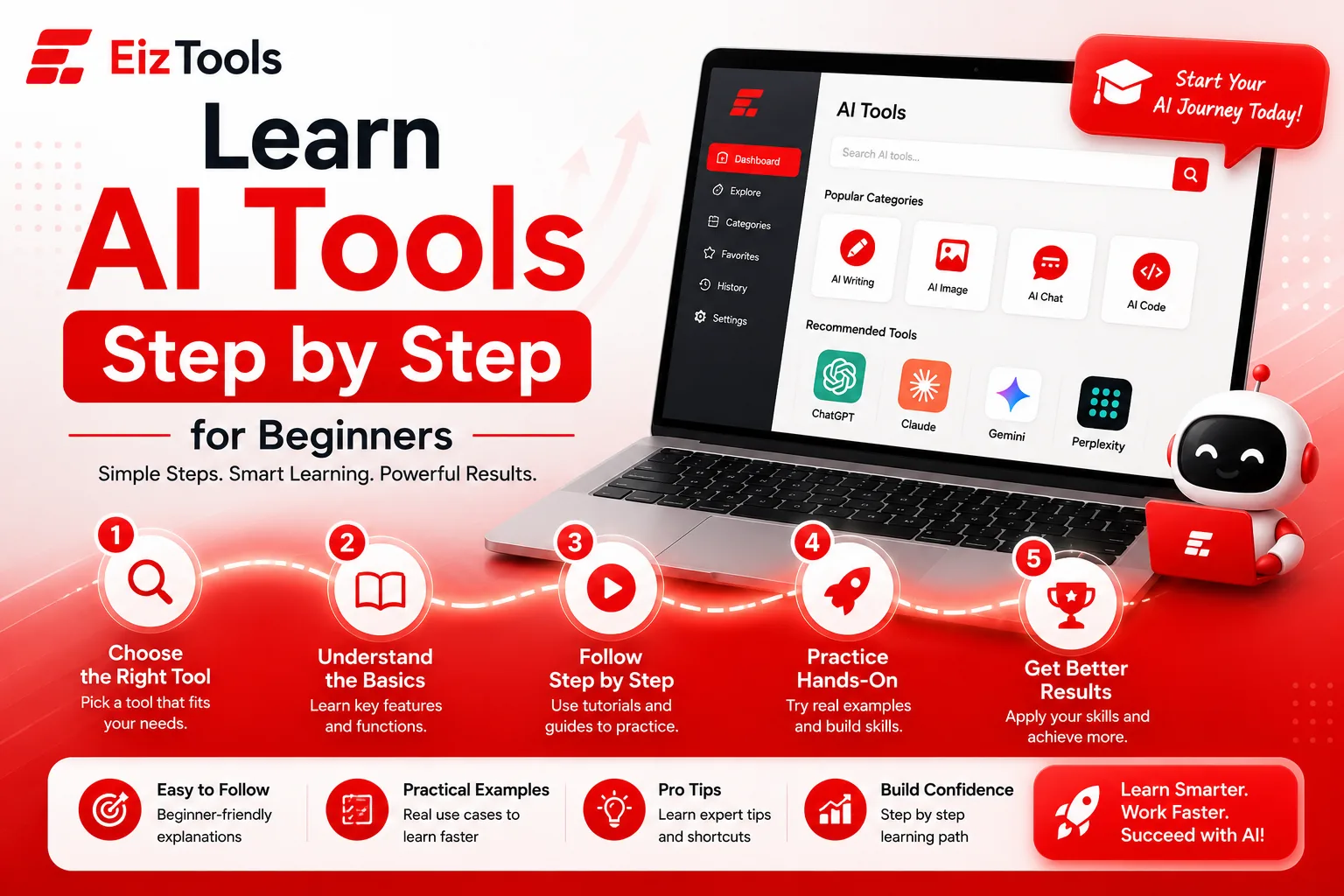
Have you ever wondered how people create articles, edit photos, generate videos, write code, or automate everyday work within minutes? Are you curious about artificial intelligence but unsure where to begin? If these questions sound familiar, you're in the right place. This guide is designed to help anyone who wants to Learn AI Tools for Beginners without feeling overwhelmed.
Artificial intelligence is no longer limited to developers or large technology companies. Today, students, freelancers, creators, marketers, business owners, teachers, and professionals use AI tools to save time, improve productivity, and perform tasks that once required specialized skills. The best part is that many of these tools are beginner friendly and require little or no technical knowledge.
In this comprehensive guide, you'll discover what AI tools are, why they matter, how to build practical AI skills, and the best approach to learning them step by step. Whether your goal is personal productivity or career growth, this article provides a practical roadmap that you can start following today.
What Does Learn AI Tools for Beginners Mean?
Learn AI Tools for Beginners means understanding how to use artificial intelligence applications effectively in everyday tasks without needing advanced programming knowledge. Modern AI tools are built with simple interfaces that allow users to interact through natural language, making them accessible to almost everyone.
Instead of writing complex code, users simply describe what they want. The AI processes the request and generates helpful outputs such as written content, designs, presentations, code suggestions, summaries, translations, spreadsheets, or data analysis.
Learning AI tools is similar to learning any modern software. The more you practice with real projects, the more confident and efficient you become.
- Understand what each AI tool is designed to do.
- Learn how to write clear instructions or prompts.
- Review AI generated results carefully.
- Edit and improve outputs when necessary.
- Practice regularly using real world scenarios.
Why Learning AI Tools Is Important Today
Artificial intelligence has become one of the most valuable digital skills across industries. Businesses increasingly rely on AI to automate repetitive work, improve customer experiences, analyze information faster, and support better decision making.
Learning AI today prepares you for both current opportunities and future workplace demands. Even basic AI knowledge can help you complete tasks more efficiently and stay competitive.
Major Benefits of Learning AI
- Complete routine work more quickly.
- Create high quality content in less time.
- Improve creativity with AI assisted brainstorming.
- Reduce repetitive manual work.
- Learn new skills faster.
- Increase workplace productivity.
- Support better research and decision making.
- Explore new freelance and business opportunities.
As AI technology continues evolving, people who understand how to use these tools effectively will have an advantage in education, business, and professional careers.
Who Should Learn AI Tools for Beginners?
The answer is simple: almost everyone. AI tools are becoming useful across nearly every profession and industry.
| User | How AI Can Help |
|---|---|
| Students | Research, note taking, summaries, language learning, presentations. |
| Teachers | Create lesson plans, quizzes, worksheets, and learning materials. |
| Content Creators | Generate ideas, outlines, scripts, captions, and editing support. |
| Business Owners | Marketing, customer communication, planning, and automation. |
| Developers | Code suggestions, debugging, documentation, and learning. |
| Freelancers | Proposal writing, client communication, project planning, and productivity. |
| Job Seekers | Resume improvement, interview preparation, and career planning. |
No matter your background, building AI skills today can make everyday work simpler and more efficient.
Essential AI Concepts Every Beginner Should Know
Before exploring different AI applications, it helps to understand a few basic concepts. You do not need a technical background, but knowing these ideas makes learning much easier.
Artificial Intelligence
Artificial intelligence refers to computer systems designed to perform tasks that typically require human intelligence, including writing, reasoning, recognizing images, translating languages, and solving problems.
Machine Learning
Machine learning is a branch of AI where systems improve by learning from large amounts of data instead of following only fixed programming instructions.
Generative AI
Generative AI creates entirely new content such as articles, images, videos, music, presentations, or software code based on user instructions.
Prompt
A prompt is simply the instruction or question you give to an AI system. Better prompts usually produce better results.
AI Model
An AI model is the technology that understands your request and generates useful responses. Different models may specialize in writing, coding, reasoning, or creative tasks.
Learn AI Tools for Beginners with a Practical Mindset
Many beginners make the mistake of trying to learn every AI application at once. A better approach is to focus on solving real problems using one tool at a time.
For example, instead of trying dozens of AI platforms during your first week, begin by learning how one assistant can help with writing, research, organization, or brainstorming. Once you feel comfortable, gradually expand into image generation, video creation, coding assistance, and automation.
The most successful learners build experience through consistent practice rather than memorizing technical concepts.
- Choose one learning goal.
- Practice daily using real tasks.
- Review AI responses critically.
- Experiment with different prompts.
- Save successful prompts for future use.
- Continue learning through practical projects.
Your First AI Learning Roadmap
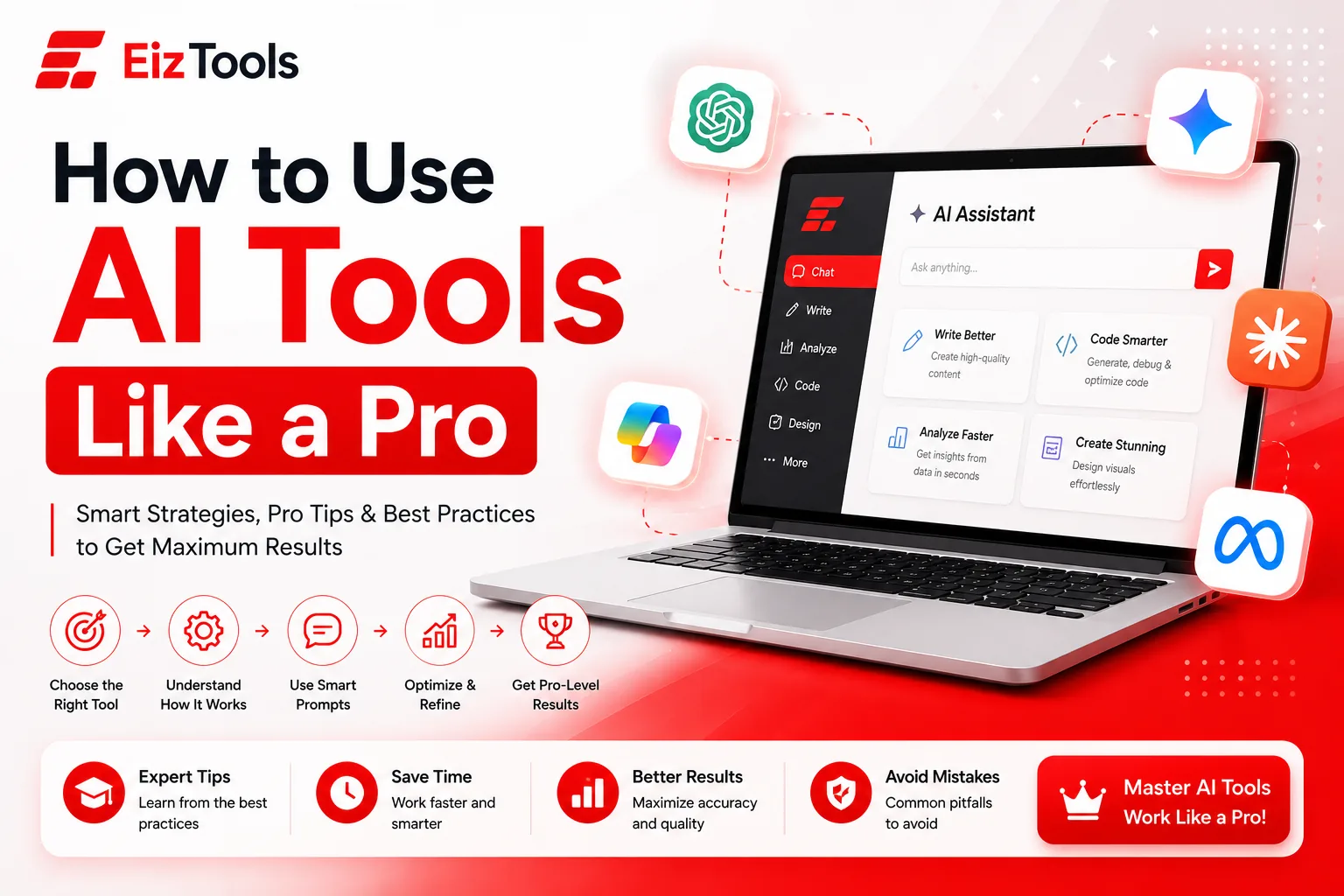
If you're wondering where to begin, follow this simple progression. It keeps learning manageable while helping you build useful skills quickly.
- Understand AI fundamentals.
- Learn effective prompting techniques.
- Practice using AI for writing and research.
- Explore image and design generation.
- Use AI for productivity and organization.
- Learn basic automation concepts.
- Apply AI to your own profession or business.
- Continue improving through real projects.
This roadmap provides a strong foundation before moving into more advanced AI workflows.
Reliable Resources to Continue Learning
Learning from trusted platforms helps you build accurate knowledge while staying updated as AI evolves.
- Eiztools for free online tools, productivity resources, and educational content.
- Eiztools Blog for tutorials, practical guides, and AI learning articles.
Using reliable educational resources ensures you continue developing practical AI skills while following current best practices.
Learn AI Tools for Beginners with a Step by Step Approach
The easiest way to Learn AI Tools for Beginners is by focusing on one practical skill at a time. Avoid trying every new AI application immediately. Instead, build confidence by mastering simple daily tasks before moving on to more advanced workflows.
The following learning path works well for students, professionals, freelancers, entrepreneurs, and anyone interested in using AI effectively.
Step 1: Learn How to Write Better Prompts
Every AI tool depends on the quality of your instructions. A prompt tells the AI exactly what you need. The clearer your request, the more accurate and useful the response will be.
Instead of writing:
- Write an article.
Try something more specific:
- Write a beginner friendly 1000 word guide explaining cloud storage using simple language and practical examples.
Good prompts usually include:
- The goal of the task.
- The intended audience.
- The preferred writing style.
- The desired length.
- Any formatting requirements.
Step 2: Practice AI Every Day
Consistency matters more than spending many hours in one session. Even fifteen to thirty minutes of daily practice can significantly improve your confidence and understanding.
Daily practice ideas include:
- Summarize a news article.
- Create a daily study plan.
- Write professional emails.
- Generate social media captions.
- Brainstorm business ideas.
- Create presentation outlines.
- Organize weekly schedules.
Step 3: Explore Different Categories of AI Tools
Once you understand prompting, begin exploring different types of AI software. Each category solves different problems and expands your overall skill set.
| Category | Primary Purpose | Example Tasks |
|---|---|---|
| Writing AI | Create written content | Blogs, emails, reports, summaries |
| Image AI | Generate graphics | Logos, illustrations, marketing images |
| Video AI | Create videos | Short videos, tutorials, presentations |
| Coding AI | Assist developers | Code generation, debugging, documentation |
| Productivity AI | Improve efficiency | Scheduling, planning, note organization |
| Research AI | Analyze information | Summaries, comparisons, brainstorming |
Best Beginner AI Tools to Learn First
Not every AI platform is suitable for beginners. Start with tools that have intuitive interfaces and practical use cases. As your confidence grows, you can explore more specialized software.
AI Writing Tools
- Create blog posts.
- Write professional emails.
- Generate marketing copy.
- Improve grammar and readability.
- Create reports and documentation.
AI Design Tools
- Create social media graphics.
- Generate illustrations.
- Design presentations.
- Create promotional materials.
AI Productivity Tools
- Manage daily tasks.
- Organize projects.
- Create meeting summaries.
- Generate action plans.
AI Coding Tools
- Explain programming concepts.
- Generate sample code.
- Find coding errors.
- Improve software documentation.
Learning one category at a time helps you understand how different AI applications work together in real projects.
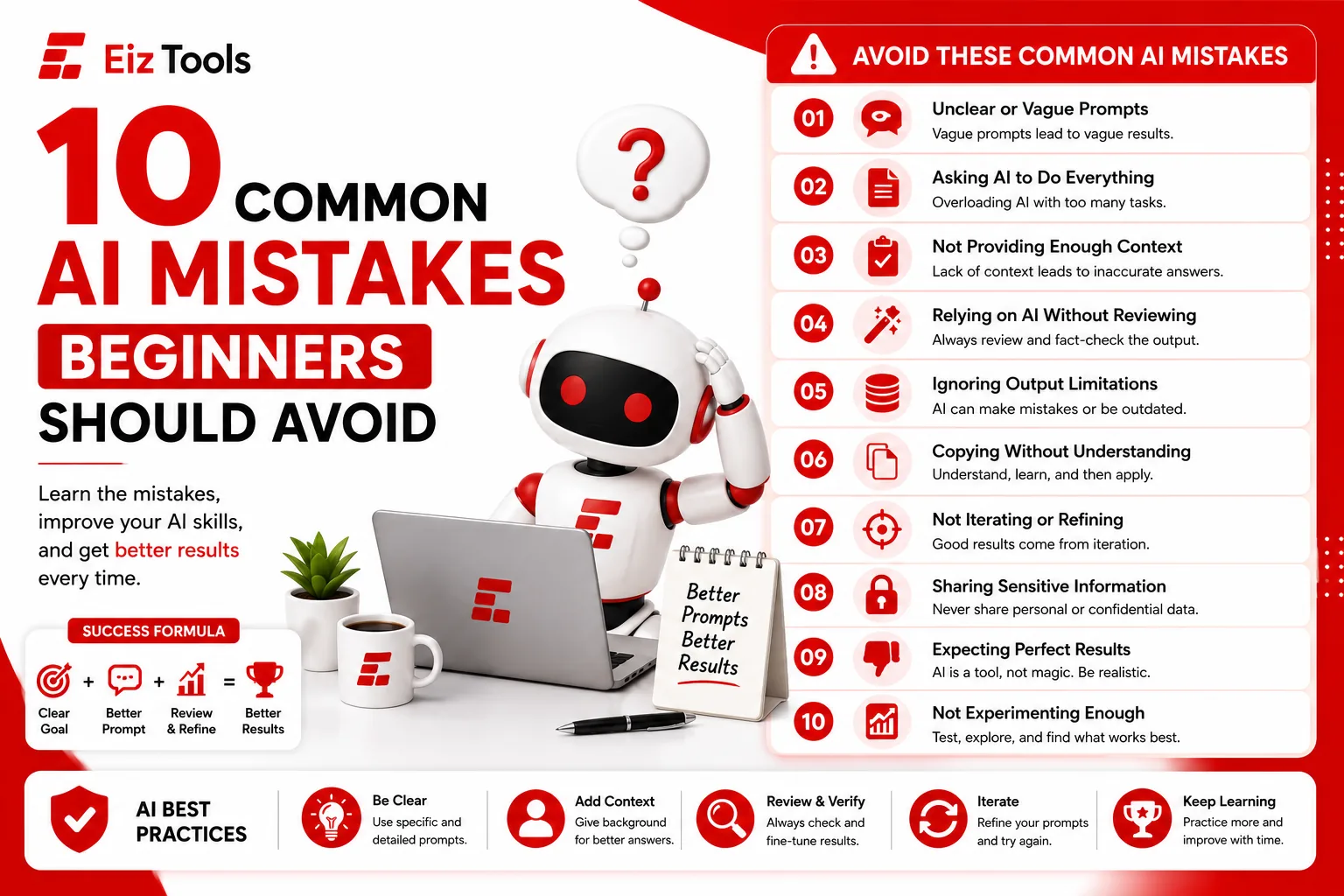
Common Mistakes Beginners Should Avoid
Many people become frustrated because they expect AI to produce perfect results instantly. Understanding these common mistakes will help you learn faster.
- Using vague prompts with little detail.
- Trusting AI outputs without verifying facts.
- Trying too many AI tools at once.
- Ignoring privacy when sharing sensitive information.
- Skipping regular practice.
- Not editing AI generated content.
- Depending entirely on AI instead of critical thinking.
Remember that AI is a powerful assistant, not a replacement for human judgment. Reviewing and refining every output is an essential part of responsible AI usage.
Tips to Learn AI Tools Faster
If you want to accelerate your learning journey, focus on building practical experience instead of memorizing theory.
- Practice with real world tasks.
- Create a collection of useful prompts.
- Experiment with different instructions.
- Compare outputs from multiple AI tools.
- Review successful examples.
- Stay updated with new AI features.
- Join AI learning communities.
- Build small personal projects.
Each completed project teaches something new and strengthens your confidence.
How AI Tools Improve Everyday Productivity
One reason more people want to Learn AI Tools for Beginners is the significant time savings they provide. AI can automate repetitive work while allowing you to focus on creative thinking and decision making.
Examples include:
- Drafting emails within minutes.
- Summarizing lengthy documents.
- Creating meeting notes automatically.
- Planning study schedules.
- Generating marketing ideas.
- Creating business proposals.
- Writing product descriptions.
- Researching unfamiliar topics.
These practical applications demonstrate why AI skills are becoming increasingly valuable across nearly every profession.
Building Long Term AI Skills
Learning AI is not about mastering one application. Instead, it involves developing a mindset of continuous learning as technology evolves.
As new AI models and features appear, the underlying skills remain the same:
- Writing effective prompts.
- Evaluating AI responses.
- Combining multiple AI tools.
- Protecting privacy and sensitive information.
- Applying AI ethically and responsibly.
By following these principles, you'll build skills that remain useful regardless of which AI platforms become popular in the future.
Advanced Learning Path After You Learn AI Tools for Beginners
Once you become comfortable with the basics, it's time to expand your knowledge and use AI for more advanced projects. The goal is not simply to use AI faster but to solve bigger problems more efficiently.
After you Learn AI Tools for Beginners, you can begin combining multiple AI tools into complete workflows. For example, you might use one tool to research a topic, another to write content, another to create images, and another to optimize your work for search engines.
This approach improves productivity while helping you understand how different AI applications complement one another.
Next Skills to Learn
- Prompt engineering techniques.
- AI powered workflow automation.
- Content optimization for SEO.
- AI assisted data analysis.
- Image and video generation.
- Presentation creation using AI.
- Document summarization and research.
- Business process automation.
The more practical projects you complete, the more confident you will become using AI in both your personal and professional life.
Best Practices for Using AI Responsibly
AI is a powerful assistant, but responsible usage is essential. Following good practices helps you produce reliable, accurate, and trustworthy results.
- Always verify important facts before publishing.
- Protect confidential and personal information.
- Edit AI generated content to match your own voice.
- Use trusted sources when researching important topics.
- Respect copyright and intellectual property.
- Continue learning as AI technology evolves.
Responsible AI usage improves the quality of your work and builds trust with your audience, customers, or clients.
Frequently Asked Questions About Learn AI Tools for Beginners
Can beginners really learn AI tools without programming?
Yes. Most modern AI tools are designed for everyday users and require little or no coding knowledge. Learning how to write effective prompts and practice regularly is often enough to get started.
How long does it take to learn AI tools?
You can understand the basics within a few days of consistent practice. Developing advanced skills usually takes several weeks or months, depending on how often you use AI in real projects.
Are free AI tools enough for beginners?
Absolutely. Many free AI tools provide excellent features for learning writing, productivity, design, research, and organization. You can always upgrade later if you need advanced capabilities.
Which AI skills are most valuable?
Prompt writing, research, content creation, workflow automation, data analysis, and critical evaluation are among the most valuable AI skills across different industries.
Can AI help students with learning?
Yes. Students can use AI for summarizing lessons, creating study plans, generating quizzes, improving writing, translating content, and organizing notes while still verifying information independently.
Is AI replacing human jobs?
AI is changing how work is performed rather than replacing every role. People who understand how to work alongside AI are often better positioned to improve productivity and adapt to new opportunities.
How can I improve my AI prompting skills?
Practice writing detailed instructions, include context, define your audience, specify the desired format, and refine prompts based on previous results. Better prompts consistently lead to better outputs.
Where can I continue learning AI tools?
Regular practice, following trusted educational resources, and experimenting with new AI applications are the best ways to continue improving your skills over time.
Conclusion
Choosing to Learn AI Tools for Beginners is one of the smartest investments you can make in today's digital world. AI is helping people write faster, create better designs, automate repetitive work, conduct research more efficiently, and improve productivity across almost every profession.
The key to success is taking one step at a time. Start with the fundamentals, practice every day, experiment with different AI tools, and apply what you learn to real world projects. As your confidence grows, you'll discover countless ways AI can simplify your workflow and help you achieve better results.
Remember that learning AI is an ongoing journey. New technologies, features, and applications continue to appear, making continuous learning an important part of staying ahead. By building a strong foundation now, you'll be well prepared for the future of work and technology.
Thank you for taking the time to read this guide. We hope it has given you a clear and practical roadmap to start learning AI with confidence.
Visit Eiztools to discover free online tools, practical resources, and detailed tutorials that can help you become more productive every day. You can also explore our latest educational articles by visiting the Eiztools Blog.
Don't forget to join the Eiztools community through our social media channels, enable push notifications, and subscribe to our newsletter. You'll receive the latest AI tutorials, productivity tips, online tools, and technology updates as soon as they're published, helping you stay ahead in the rapidly evolving world of artificial intelligence.

Sabir Bepari
Founder of EizTools and a passionate AI enthusiast dedicated to building practical, user-friendly AI tools that simplify everyday tasks.
Join the Newsletter
Get the best new AI tools and tips delivered to your inbox. No spam.
By subscribing you agree to receive emails from EizTools. Unsubscribe anytime.
Follow EizTools
Discussion 0
Join the conversation — share your thoughts, ask questions, help others.
No comments yet. Be the first to share your thoughts!