




Freelance Proposal Draft
Pro proposal generator
 NVIDIA: Nemotron 3 Ultra (free)





Your prompt will appear here…
Your beautifully formatted article will appear here once you generate.
No history yet
Your generations will appear here. Sign in to save them permanently.
A promising inquiry lands in your inbox. Someone has a budget, a rough deadline, and a problem they want gone. Between that first message and a signed project sits exactly one document — your proposal. This is where a surprising number of freelancers quietly lose work, and rarely because a competitor is more talented. They lose because the proposal showed up three days late, read like a template, or left the client wondering what on earth to do next.
Winning proposals are less about polish than about a handful of habits you repeat on every inquiry. Below are the ones that consistently turn "we'll be in touch" into "when can you start" — and how to execute each without burning a whole evening at the keyboard.
Speed wins the client
The freelancer who replies first sets the frame for the entire conversation. When a prospect emails five people, the one who responds within a few hours reads as organized, available, and genuinely interested before a single price is discussed. Wait two days and you become the name they compare against someone they already like.
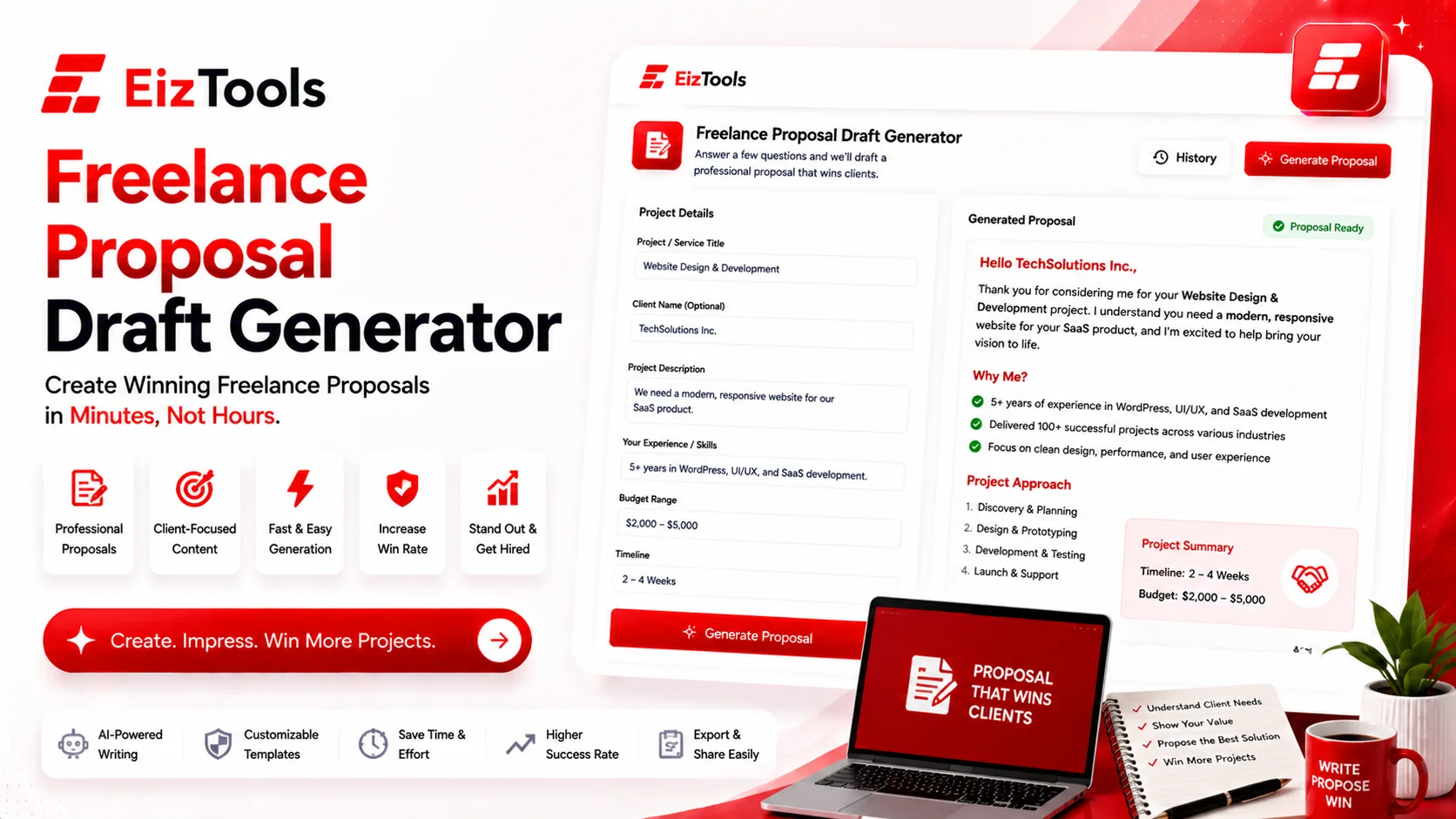
Speed doesn't mean a rushed, careless note. It means having a repeatable way to go from inquiry to a real draft in minutes. Paste the client's message into a Freelance Proposal Draft and you get a structured starting point — problem, scope, timeline, price — that you tighten instead of writing from a blank page. For a larger engagement that needs a longer, more formal document, the Proposal Generator builds that out in the same sitting.
Show you understood the brief
Before a client cares about your process or your rate, they need to feel understood. The fastest way to earn that is to restate their problem, in your own words, at the very top of the proposal — ideally more clearly than they explained it themselves.
Skip the "Thanks for reaching out, here's what I offer" opening. Lead with their situation instead:
You're launching in six weeks, your checkout is losing people on mobile, and you need it fixed without rebuilding the whole store. Here's how I'd approach that.
That one move separates you from every freelancer who pasted in a services list. Because a Freelance Proposal Draft builds from the client's own message, this restatement happens almost automatically — their words seed the opening, so the client sees their situation reflected back before they reach your number.
Scope the work tightly
Vague scope is where profit quietly dies. "I'll build your website" invites endless revisions, surprise pages, and a client who assumed the logo redesign was part of the deal. A tight proposal spells out exactly what's included and, just as importantly, what isn't.
List deliverables as specific line items: three page designs, one round of revisions, a mobile-responsive build, a handoff call. Then add a brief "not included" note for the predictable extras — additional revision rounds, copywriting, ongoing maintenance — each available separately. You're not being difficult; you're protecting the timeline and the relationship. A crisp scope section also makes the price feel earned rather than pulled from thin air.
Price with confidence
Nervous pricing shows. Padding the number with apologies, over-explaining every line, or floating a discount before anyone asked all signal that you're not convinced you're worth it — and clients pick up on that instantly.
State the figure plainly and tie it to outcomes rather than hours. "Fixed project fee: $3,200, covering everything above" lands far better than a shaky hourly breakdown that invites haggling. If budget is a genuine concern, offer two tiers — a lean version and a fuller one — so the conversation shifts to which option rather than whether. Confidence is partly a matter of format: a number sitting inside a clean, well-organized document carries more weight than the same figure buried in an email.
Make the next step obvious
A proposal that trails off with "let me know your thoughts" hands the work back to the client and stalls. Close instead with one clear, low-friction action: a link to book a kickoff call, a plain "reply YES and I'll send the agreement," or a deposit link that starts the clock.
Spell out what happens after they agree, too — you send an agreement, invoice the deposit, and reserve the start date. Removing that uncertainty makes saying yes feel safe rather than risky. When the next step is obvious, decisions that used to drift for a week often close the same afternoon.
From proposal to payment
The proposal is the first domino, not the finish line. The moment a client agrees, keep the momentum moving: confirm the scope you outlined and send the deposit request while enthusiasm is still high. An Invoice Generator turns the figures already sitting in your accepted proposal into a clean bill in a couple of clicks, so there's no awkward gap between "yes" and getting paid.
Treat every inquiry as a small, repeatable system rather than a one-off scramble. Respond fast, mirror the problem, scope it tightly, price like you mean it, and point to the next step — then let a Freelance Proposal Draft hold the structure so your energy goes into the work itself. Do that on every lead and your close rate stops depending on luck.

Sabir Bepari
Founder of EizTools and a passionate AI enthusiast dedicated to building practical, user-friendly AI tools that simplify everyday tasks.